
Health and environment

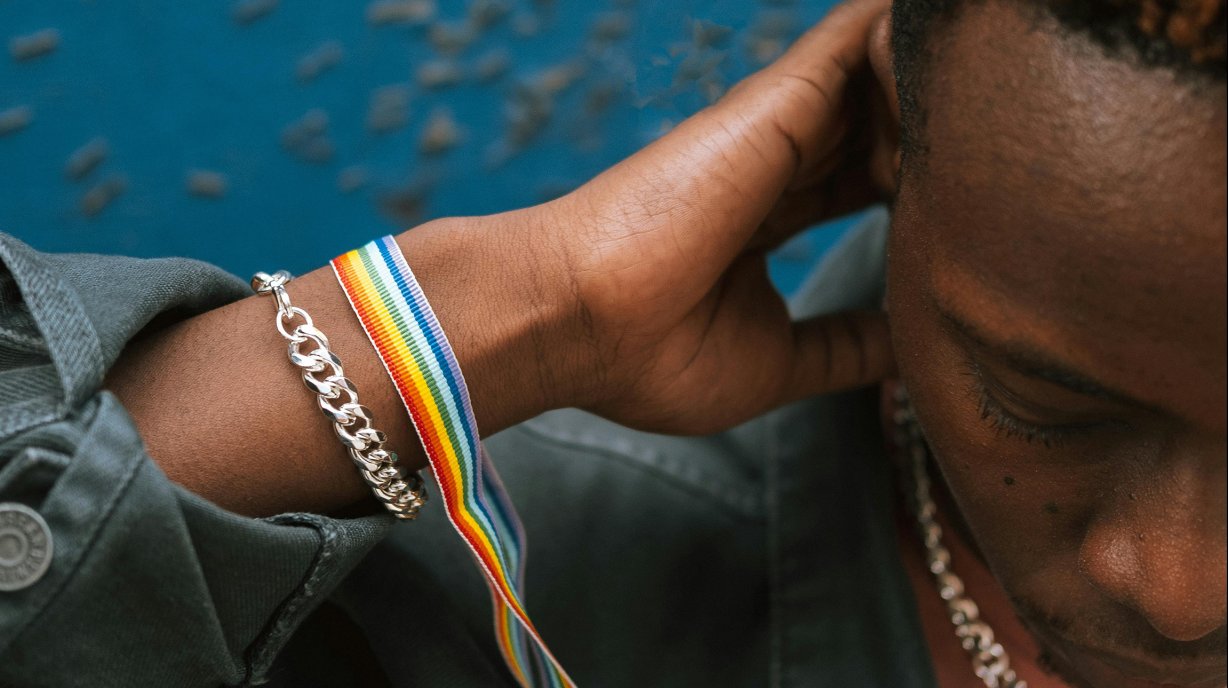
©Anete Lusina via Pexels
In many low- and middle-income countries, being LGBTQIA+ entails a double burden: discrimination compounded by economic precarity. Economists Bruno Ventelou and Erik Lamontagne reveal how this combination can undermine mental health, by cross-referencing global data on wellbeing, economic conditions, and the homophobic climate.
In the opening days of his second term, Donald Trump introduced a series of measures hostile to LGBTQ+ people, notably cutting funding for research and support programmes. This harsh institutional stance risks long-lasting consequences for LGBTQ+ communities not only in the United States, but worldwide. In nearly 40% of countries with available data, at least one in three respondents say they would not want a gay person as a neighbour, according to the World Values Survey1. These views are not inconsequential, and can weigh heavily on the wellbeing of those concerned.
Health economists Erik Lamontagne and Bruno Ventelou examine how social exclusion harms the mental health of LGBTQIA+ people, especially in contexts of economic fragility that heighten vulnerability. The authors’ conclusion is clear: the more homophobic the environment, the greater the mental distress; and when homophobia is coupled with economic precarity, the damage intensifies further.
Seventh edition of the World Values Survey, a global survey on the evolution of values and beliefs conducted from 2017 to 2022
The study draws on a global dataset - the Global LGBTQ+ Happiness Survey - featuring responses from more than 80,000 people across 153 countries, developed in partnership with community organisations (notably the LGBT Foundation). This partnership is a major strength, given how difficult it can be to reach communities in highly heteronormative countries. Participants were recruited primarily online via dating apps, supplemented by snowball sampling to reach people with limited internet access or living in places where being open about one’s sexual orientation is risky.
A quarter of LGBTQIA+ respondents report psychological distress, and nearly half are not accepted by their families. Physical assaults remain common: 21% say they have been attacked because of their sexual orientation or gender identity. This database has been used before by the same team, including for a previous study showing an elevated risk of depression and anxiety among LGBTQIA+ people at high risk of HIV infection.2
Erik Lamontagne, Vincent Leroy, Anna Yakusik, Warren Parker, Sean Howell, et al., 2024, "Assessment and determinants of depression and anxiety on a global sample of sexual and gender diverse people at high risk of HIV: a public health approach" BMC Public Health, 24, 215.
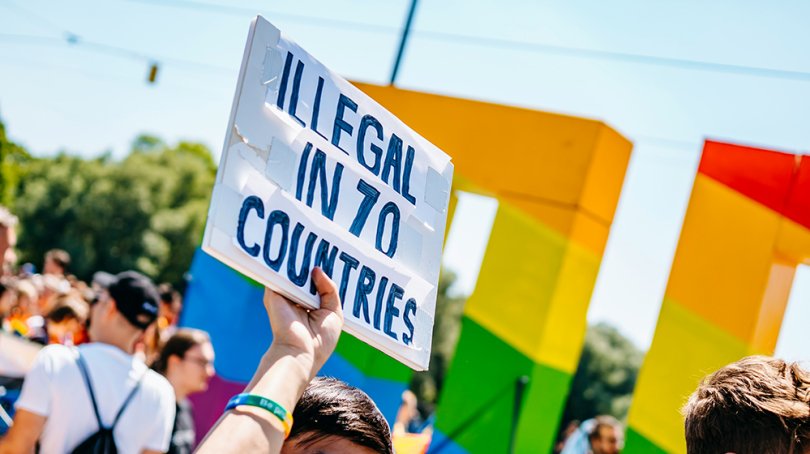
Munich © Raphael Renter via Unsplash
What does economics tell us about the impact of discrimination on the quality of life of sexual minorities? Over the past two decades, research - mostly in high-income countries - has shown that homophobia significantly harms mental health, access to healthcare, and overall wellbeing. American economist M. V. Lee Badgett, for example, estimates that discrimination against LGBTQIA+ people in India costs roughly 1.7% of GDP, driven by limited access to healthcare, hiring stigma, and violence.
Yet much of this research relies on aggregate approaches that can overlook the role of one’s immediate environment and local economic conditions. The present study addresses that gap by exploring how economic precarity - at the individual and/or community level - can amplify the negative impact of homophobia on LGBTQIA+ wellbeing.
In doing so, it aligns with a broader body of economic research that centres the social determinants of wellbeing. Economist Claudia Senik - an international authority on the economics of wellbeing whose work3 blends behavioural economics, psychology, and the study of social norms - has shown that subjective wellbeing depends not only on individual factors such as income or employment, but also on the social climate. How we compare ourselves with others, along with prevailing national norms, can strongly influence how happy we feel.
Here, homophobia is understood broadly as a catch-all term for all forms of stigma and discrimination based on sexual or gender characteristics. It is not limited to the rejection of homosexual people; it encompasses attitudes and behaviours that denigrate, marginalise, or deny recognition to non-heterosexual identities and relationships. This definition includes both symbolic and physical violence experienced by LGBTQIA+ people in social, family, or institutional settings.
Claudia Senik, 2014, "Wealth and happiness'", Oxford Review of Economic Policy, Volume 30, Issue 1, Pages 92–108.

© Jessica Scalf via Unsplash
To better capture the link between social context and wellbeing, the authors distinguish three contexts corresponding to key dimensions of homophobia: family, community, and institutional. By combining these indicators with the responses of LGBTQIA+ participants, they analyse how the surrounding social climate affects subjective well-being (SWB).
By analysing responses from a sample of 82,000 people, the authors show that social context - and, in particular, the degree of homophobia - has a measurable impact on psychological wellbeing. As one might expect, LGBTQIA+ people living in highly homophobic families or communities report being less satisfied with their lives than others. Yet institutional homophobia - measured at the national level and driven by laws and a broadly heteronormative culture - also plays an important role in shaping people’s assessments of their own wellbeing.
Applied across numerous subsamples, the pattern holds: all three dimensions of homophobia are linked to reduced wellbeing across socioeconomic groups and regions worldwide.
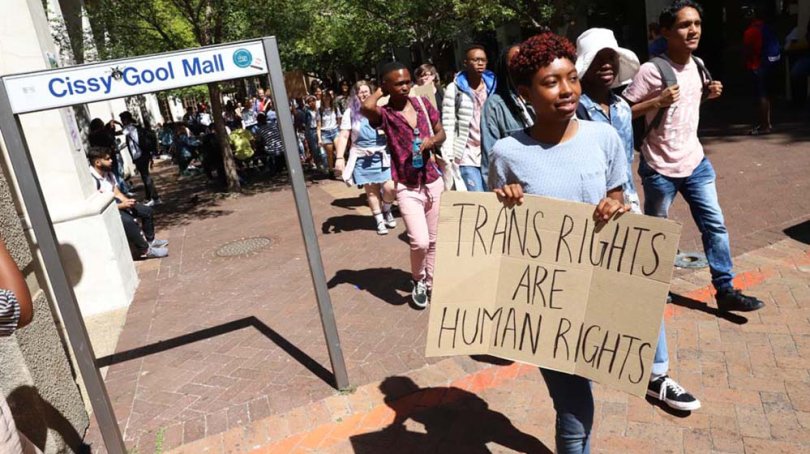
March in solidarity with the trans community, University of Cape Town, South Africa, March 2019. © Michael Hammond via University of Cape Town's website
The study goes further, probing the relative weight of the three dimensions - family, community, and institutional - in driving declines in wellbeing. In other words, how much each facet of ambient homophobia contributes to individual happiness or unhappiness?
Each dimension exerts a marked negative effect on LGBTQIA+ wellbeing, but family rejection - when present - weighs the most. This pattern holds regardless of a country’s wealth or inequality levels.
The negative effect of institutional homophobia is especially pronounced for people facing economic precarity. Where social safety nets are weak, LGBTQIA+ individuals are more exposed to the concrete consequences of exclusion: difficulty finding work, accessing healthcare, or living safely in their communities.
Community-level homophobia also presses more heavily on those who are economically disadvantaged - roughly 3.5 times more than on the well-off.
As such, homophobia amplifies economic insecurity, making inequality even harder to bear. Addressing it requires action on all fronts - by changing discriminatory laws and encouraging acceptance, certainly, but also by reducing precarity, and working towards fairer societies.

A media that makes economics accessible to all